This weekend is the return of Team Tabletop.
We will be doing the fifth and final mission of our current Battletech series. So far we have cut off enemy communications, found an advanced unit, destroyed a manufacturing facility, and failed in cutting off enemy supply lines. Early reports tell us we will be facing an urban combat environment for the first time.
Should be fun.
We'll be getting an early start, so there WILL BE BRUNCH. 'Cus that's how we roll.
Monday, June 11, 2012

Thursday, May 17, 2012
What Makes a Good Game Producer?
Defining the role of Producer
Nearly every producer in entertainment is asked the same question: "what does a producer do?"The definition of a producer changes in every studio. Sometimes they are more like project managers, handling the budget and schedules. Sometimes they are more like design directors, holding the vision of the product and seeing that every aspect meets that core direction. Sometimes they are firefighters, solving problems in rapid succession, usually because no one bothered with the core vision, budget, or schedule in great detail. Other times they are whatever the company needs at that moment, swapping hats as designers, programmers, QA, or artists, as they know just enough about each area to do beginner-level work.
There simply is not a good definition for what a producer does, because the true answer is "everything".
For the producer, this creates a bit of a problem in work assessment. Are you doing a good job? Well did you do "everything" today? As a producer on various products, usually I'm judged by my superiors on the quality, efficiency, and frugality in whatever area I happen to be in charge of for the product. To the publishers and most of the outside world, I'm judged on how good the end result of the area of the product turned out in retail, even though many of the decisions of that product were made well above my payscale.
 |
| I produced Homefront single-player campaign, so go ahead and judge. |
Lessons from a Film Crew
When I worked in film, I was taught a simple rule to know when you see a good producer: "they are the ones sitting, talking on the phone all day about the next film". On a film set, every detail of every job is clearly defined to the person doing that job. You dare not pick up an apple box unless your title has Grip in it. Do not even try to plug in anything electric unless you are on the Gaffer's team. It is frequent on a film set to see a group of perfectly capable crew standing next a 5-pound object that needs to be moved for the next shot and refusing to touch it as if it were covered in razor blades and excrement. Instead they radio over to the one whose job it is to move that object and have them come in from a hundred yards away. |
| Mr. Cruise is on the set. Someone radio a Grip to move his "leveling device" |
This might sound like insanity, especially when you are new to a set. The common complaint aired by crew members is "hurry up and wait" because they cannot move ahead with their job until a blocker is handled by the specific person that handles that specific blocker. Surely the whole production could save time if only I could plug in my own plug or lift a simple box.
But there are reasons behind this insanity. Each part of the crew has responsibilities to be ready to go when the time comes. If someone else begins to go rogue and handle their own simple tasks, then disasters begin to happen. A Gaffer might have all the power of that site maxed to capacity for the lights on set. If you need electricity, then only his team would know which circuits are safe and which could be killed just by plugging in your cell phone charger. Likewise, Grips are not just responsible for moving things, but making sure this things are safe for the rest of the crew to be around. If someone trips over a simple box, then it is the Grip's fault no matter who moved it. If you were on the hook for that kind of responsibility, you would flip out if someone moved something as well.
 |
| One of my responsibilities on The Station Agent: be this dude's hands to write a note. I'm serious. |
Producers on film crews also have a specific responsibility. They are in charge of making sure that everything that is required for that day's work to happen is present and ready. If someone needs something to do their job, then the producer has work to do. They are present on set to handle anything that may come up throughout the day, and things come up all of the time. Weather changes, deliveries are late, equipment breaks, vans are stuck in traffic, etc. As these problems arise, the producer needs to run over and handle that problem immediately.
This is why it is the sign of a good producer on film when they are sitting on set, because it means there are no problems. They have though of everything and technically their job is done. They do not need to pay attention to the job at hand, so they might as well figure out the details of the next shoot which will be coming in 3 months.
A clearly defined role allows for a simple behavior to be used as a measure of performance.
Working in Games
Now in the game industry, roles are not as clearly defined. It's much more of a muddled system where everyone has their own process and style. Roles lack definition, especially in the production team. It's exactly like film, only back in the early 20th-century when no one knew what they were really doing. | |
| What's the stuntman of which you speak? |
Likewise, producers in games need to know a little bit about everything. They may not be able to code the game, but they better be able to read code well enough to find glaring errors in logic. They may not have an art degree, but they better know exactly what the art director is looking for when they negotiate art from an outside vendor and approve contracts and payments. In many of these cases it is good for the producer to have experts in each department that they can use for reference.
But despite whatever your studio's style of producer, there is a common thread among all of them that is akin to their brethren in film: they are there to make sure everyone can do their job that day.
Everyone's needs change quickly in game development. New problems and new bugs come up suddenly and need to be dealt with. The best way to handle this as a producer is talk to a lot of the right people and find a good course of action. If there is not a problem du jour, then there are problems coming tomorrow or the next day. Some you can plan for, but others will surprise the best of us. But whether your producer is being proactive or reactive, they are following the same basic behavior: they are talking with other people and making plans. This can be done over the phone, but for some reason the most efficient meetings are face-to-face. And to do this, that producer is not going to be at their desk most of the day.
So in my own experience, the best game producers are the ones you cannot find in their own desk. They are the ones constantly on the move, jumping from meetings to talk to a developer at their desk, and then off to QA. They should be wearing running shoes and not run out of breath when they go up a flight of stairs. Game producers should function like sharks; constantly swimming or else die.
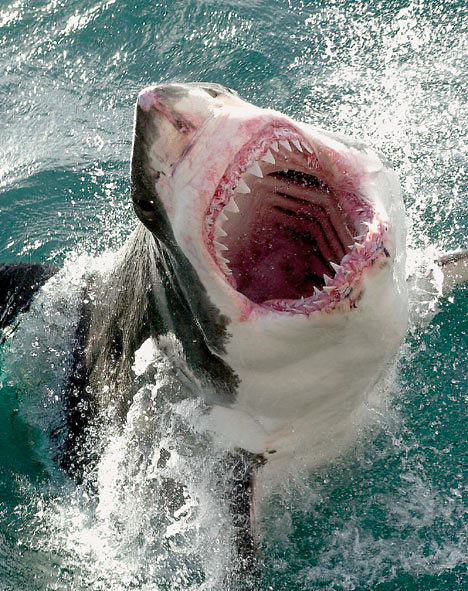 | |
| You're gonna need a bigger console |
Thursday, May 10, 2012
The Rules of Entertainment
If you are an entertainer, there are 3 things that are REQUIRED in whatever you are giving to an audience for it to be entertaining:


- You must make the audience learn something
- You must make the audience feel something
- You must surprise the audience with something
Now I cannot claim credit for this list. I heard it during an interview with Penn Jillette. I am not sure if he originated this list either, but since it is such sound wisdom I would not be surprised if this was a list that Mr. Jillette in turn heard from some predecessor.
Not to say that Mr. Jillette cannot have profound and wise things to say, but he is paid to be the loudmouth distraction so you do not notice what Teller is pulling out of his pocket.

It's like the Tank and Medic pairing in TF2, if the Medic was silent and the Tank made cameos on Fox News.
Think of every good movie, song, book, or game you have loved as an audience member. These 3 rules apply. That movie you've watched a hundred times and still love it? Ever discuss it with other people and mention how you see something new every time? How about a new movie? Did you like the Avengers? Then you learned, felt, and were surprised by something. Didn't like it? Well then you are so well-versed in the Marvel universe and so detached from your own emotions that I just can't help you, man.

Though this IS how the movie showed a grown man who is in touch with his emotions.
What really surprises me that in my own 12+ year career in entertainment, how many people in the film, tv, and game industries haven't a clue that you need to provide these things to have a satisfied audience. And this is a raising bar, as our audience is being more sophisticated and informed over time. Making a group of people learn something or be surprised by the same formula is becoming a trickier task by the day.
When Call of Duty 4: Modern Warfare came out, the FPS market was dominated by the Halo series. Then MW1 provided a photo-realistic world that put you in cinematic events (a.k.a surprise events to break up the run-and-gun), emotionally laden moments (you are killed as the main character in the first 5 minutes of the game), and realistic military phrases (anyone outside of the military know what "Oscar Mike" meant before COD?).
Now we have seen several blockbuster sequels, but Infinity Ward has a serious problem. What will they teach and surprise us with next? We've seen just about every kind of slow motion vehicle explosion and Russian terrorist plot that could be jammed into a game. Black Ops 2 is going into a futuristic warfare of robots and computers. Does this mean the franchise has to go into the future to surprise us because it has outpaced itself past the present?

Because calling it "Post-Modern Warfare" would be a bit too self-aware to allow tanks with size 83 sneakers.
For a long time in the game industry, there was an open question to developers, "can a game make you cry?" Many fans of Final Fantasy pointed to the Aeris death scene in FF7 as one of the most poignant moments in games, because it surprised the audience and brought them on the verge of tears.

Time to get the Kleenex.
For myself, I didn't own a PS1 so I never experienced this moment (though I heard about it quite a bit to know most of the details). I would use another example that may not be as popular, but really does capture a full entertaining experience for myself as an audience member: Shadows of the Colossus.

The player is the one on the left.
If you have never played this game, you should play it as soon as you possibly can. The opening sequence takes its time setting a basic adventure story, but makes sure that you are emotionally invested. This is not about saving a princess in another castle. At the start, your character brings the love interest to a temple. She is in coma and you, the plucky young adventurer, has traveled with your body across far lands to find a cure. The temple sends you on a quest to kill 16 colossi, each one a different living puzzle.
The space is artistic and vast. The colossi are damn near the biggest things I have ever seen in a video game space. Each one is almost passive when you first approach, and any violent actions could almost be seen as them defending their own person or territory. There deaths come with a mixed sense of victory and sympathy, similar with the choice to farm Little Sisters in Bioshock rather than save them.

Sorry little girl. Your corpse means more bonus points. Good ending be damned.
As we wrap up the tail-end of the current console generation, I doubt we will see investment into these level of details as they are not always seen as a good investment in games. Studios have been rocked in the last few years; previously riding a high of thinking we were recession-proof, to feeling the low of record numbers of studio closures. They know the audience for consoles are dropping off and they are being more selective about what games they are playing. Now game studios can only invest in games that will make their money back. That does not leave much room for surprise, learning, and emotion, especially when those elements are never a guarantee that every person will feel those things. Even in the best pieces of entertainment, there are just those completely competent individuals that just "don't get it".

Mr. Ebert, I'm looking at you.
But I feel it is a requirement of all entertainers to strive to be one step ahead of your audience or else you are no longer entertaining. Very much in the spirit of Lee Iaccoca where you need to "lead, follow, or get out of the way", as entertainers we need to make the audience feel something, or get in the seats with them.
Tuesday, May 8, 2012
Being a Gamer Dad
I am a gamer, a developer, and a dad. I have a toddler at home that completely changed everything in my world. Gamers without kids might not understand that shift, so I will explain.
My daily routine before becoming a dad was fairly game-centric.

My daily routine before becoming a dad was fairly game-centric.
- Get up in the morning and play a game with breakfast; find time to take care of 2 cats and a dog
- Go to work, making games
- Lunchtime, play games with other game developers
- Continue making games, usually late into the night
- Come home and walk the dog
- Rinse, repeat
Now that I'm a dad, the routine has shifted considerably
- Get up in the morning and barely have time to feed and change kid, while eating breakfast and taking care of 2 cats and a dog
- Go to work, making games
- Lunchtime, gym so that I have enough energy to keep up with the kid
- Continue making games, but need to leave promptly at 5 to take care of the kid
- Come home and take care of the kid. Find time to make dinner and take care of the dog
- Fall asleep early
- Rinse, repeat
Now in my pre-kid life, I had plenty of time to catch up on latest designs and releases. I would be current with the goings-on in the game world and familiar with all of the big titles that were just released. This is a necessary part of my job because games are a literacy. It is a literacy that changes and improves quickly, so if you lose touch you are no longer competitive as a developer.
As dad's out there should know, your kid becomes your world in a good way. Every moment you spend with them is fantastic. Sometimes a little stressful and crazy, but you'd rather be the dad on the floor making stuffed animals talk than the dad in Cats in the Cradle.
But I do need time to game, not just for my job but also for my own downtime. The simple solution would just be to fire up the console once the kid has gone down for the night, but this is also time to spend with the wife and this leads down the path of great dad, terrible husband.
So as a gamer dad, you need to pick your battles. Sneaking in a 1/2 hour when the kid is down for a nap and the wife is at the gym. Though keep in mind that even though your child is sleeping, you are like a fireman; you are on call that instant no matter what you are doing at the time.
I would recommend being selective of what games you play as a dad. I don't mean to keep just to the E for Everyone games. I mean that you should focus more on SP games with the ability to save at the drop of a hat. Nothing is worse than getting far in a MP game and then having to drop to check on things upstairs.
You will not be able to play an MMO. Your kid is now your MMO.

It's like Children's Week, only permanent and no time to slay dragons
Monday, April 23, 2012
Team Tabletop #4
Battletech Mission #4
Our group of NY/NJ area game developers once again assembled for our tabletop gaming session to continue our current Battletech experience. In the game, we have formed a motley crew of mercenaries trying to make a buck in the conflicts in space.In our previous 3 missions, we have stormed a fortified communications array, failed to protect a demolition crew to disrupt a supply chain, and blow the holy hell out of a tank factory.
Now we have been told in our pre-game mission briefing that we are to enter a planet covered in heavy jungle. We are searching for a Clan mech, but we will be facing off against an enemy recon squad in the search as well. Our team must rescue the Clan mech, and if possible destroy the enemy recon force and any defenses they have.
How many producers does it take to Meta-Game?
In this group, most of us are game producers and project managers. Since Battletech involves resource management and choice of mechs prior to entering combat, we have applied our professional skills into our strategy.
Our pre-game planning, using mech sheets and a spreadsheet on a Droid tablet to manage repairs
We are facing off against a GM who is a game designer by trade. He is wily and has forced our hand in previous conflicts to extend ourselves and make sacrifices. He has also given us the hint to install Beagle sensors due to the heavy fog and tree cover. And anyone that has played a game with a GM involved, you know that if they suggest something, you better do it. You will not get a second chance to make that mistake.
Over burgers and our Google doc spreadsheet, we analyze what mechs we can repair from the last session. Our heaviest mech has been destroyed which opens up quite a bit of repair time for remaining mechs, so we cover our options:
- most of our mechs need only light repair
- we are heading into a jungle, so we need light mechs with jumping capabilities (it takes more to walk through dense forest per turn). These should also be fast, since our GM has probably hidden the Clan mech on the far side of the map.
- we need to remove weaponry from the light mechs to install these Beagle scanners, so they will functionally be scouts only
- we need to back up the scouts with firepower. We believe most of the combat will be short-range, so we bring in the Thug. We are split on the Warhammer (up-close combat) or the Catapult (long-range damage and needs heavy repairs at this time). The Warhammer can fend for itself, but the Catpult can move faster and the scouts can call in long-range strikes from it when they find the enemy. We decide to risk the repair time on the Catapult and send in our best gun to pilot it.
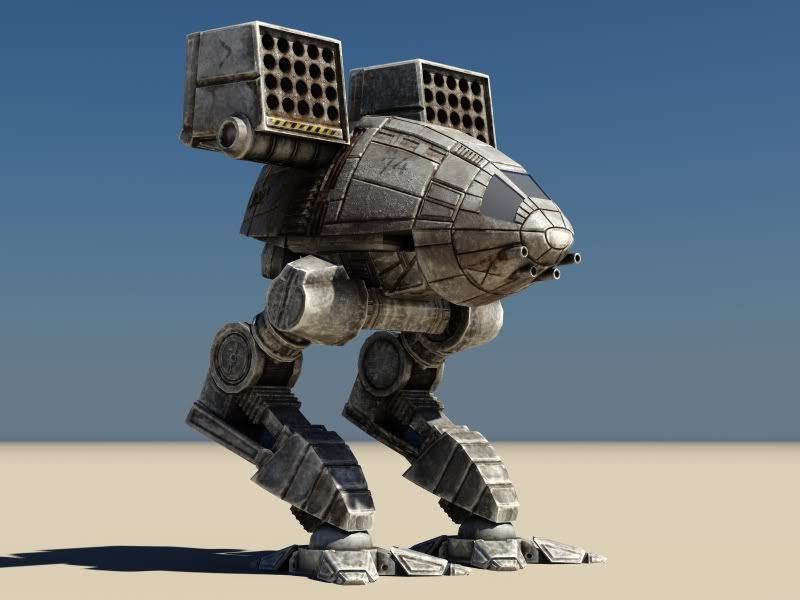
Somehow this mech required 5 hours of repair to the arms
Our strategy: go in fast with the 2 scouts. As we scan the area for enemies, put the catapult in a good location to hit the entire map. Slowly bring in the Thug for cleanup. Essentially, zerg-rush to the far side of the map so we can cutoff the enemy and get the Clan mech.
Into the Woods
We immediately take off into a pincer formation with the two scouts acting as point. Our scanners are not having much effect as something seems to be jamming us. As we march through (or in most cases jump over) the woods, we see artillery shells being shot off in the distance. A round later, those shells are splashing in where we were just standing. Lesson learned: this is not the game to stand in one spot.

Not a single reference image on the internet of Battletech mechs in the jungle, but a ba-jillion Avatar images. Internet, you have failed me.
Our scouts are halfway across the map when suddenly our Catapult is jumped from behind. The Thug doubles-back to provide support while our scouts continue to head deeper into the brush. Now our scouts are jumped.
Somehow our scouts are able to pull through, even though they are being out-gunned and out-manuevered, we return enough damage to keep the enemy at bay. We're also able to locate to 3 artillery camps and wipe them out.
At this point, we have turned the entire jungle into a meat grinder. We have located all artillery camps and enemies. We have given out a fair bit of damage, but our team is also starting to become a little worse for wear. Our scouts are badly damaged, one having lost an arm. Our Thug barely has any armor left, and the Catapult is just able to stay alive long enough to put a few more missles into the air.
Fortunately we were able to knock down one of their mechs. The other mechs scattered as it looked like we would now have the numbers to defeat them. We then had the freedom to look for the Clan mech (which happened to be close to our starting point and we would have found it if we just walked forward).
Next Round - the Final Mission
The next game will cover the final mission in this series. We only have a few mechs left and not a lot of time for repairs. Our team handles knock-down fights well, but we suck at recon and escort missions. Let's see what the GM brings us.
Friday, April 20, 2012
Tabletop Game Tonight
Tonight the plucky crew of NY/NJ game developers will be continuing our Battletech series with our fourth mission. Our team has been pretty beaten up, and most of our mechs are heavily damaged or beyond repair.


No idea what will be coming, though we will be using baby toys for our battlefield layout, especially the squeaky whale.
I'll post a recap of the game in the not-so-distant future.
Tuesday, April 17, 2012
New York Gamers
The game industry is a very small and tight community. Within 5 years of a career, you have connections with just about everyone. This doesn't mean you'll be talking game designs at a coffee shop with Jane McGonigal or Cliff Bleszinski (or maybe you will as developers are a friendly bunch), but it will mean that you are within 2-degrees of separation from these folk.


If anyone could make a Kevin Bacon game with Jane McGonigal, it would be Jane McGonigal
Now that there have been a lot of studio closures and openings across the industry, that has exacerbated the mix. For example, most of the team I worked with at Kaos are now spread across the globe in just about every other studio that exists. And this happened within 6 months. That's extreme networking.
Within New York, that interconnectivity is especially strong. There are many studios in and around the New York area, and we all want the other studios to succeed. Games have not taken off in this city like in Austin, San Fran, LA, Vancouver, or Montreal. But we are here, working to prove that game companies can be very successful here. We will support each other through IGDA and other gatherings to make sure that our talent pool and industry is strong.
With that said, I truly support the endeavors of Avalanche Studios. They quickly filled the gap of triple-A gaming that the fall of Kaos created in this city. And they did it with an attitude of not trying to prove anything except that great games can be made here.
They've gathered a truly talented bunch of developers, and as soon as they announce their project, I will be in the pre-order line.
And it helps that they shoot me messages across Spring St.

That's epic
Subscribe to:
Posts (Atom)
Subscribe To


 Posts
All Comments
Posts
All Comments